What is the Hadjod Plant? Its Benefits, Uses, and How to Identify It
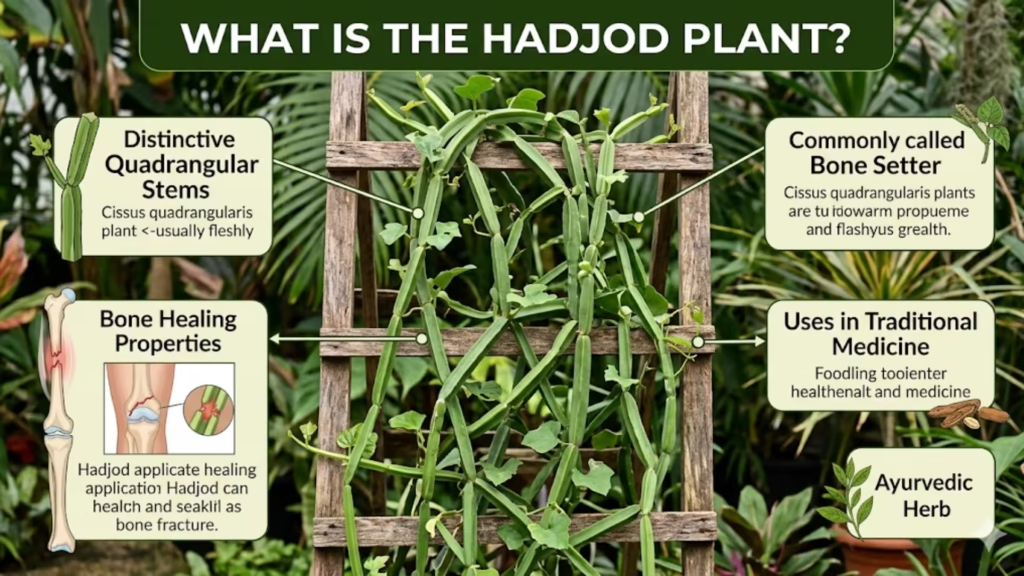
Harjor is a medicinal vine renowned in Ayurveda for its ability to knit and strengthen bones. It offers numerous benefits, such as reducing inflammation, relieving pain, and boosting immunity. It can be consumed in the form of a powder, juice, or decoction. With proper identification and balanced usage, it serves as an excellent natural remedy. Starting with a Common Problem… If you have ever endured the pain of a broken bone (fracture), you know that it is not merely a physical ordeal; it completely disrupts one’s daily life. Alongside medical prescriptions and plaster casts, people often seek out home remedies and Ayurvedic treatments to help their bones heal faster. This is precisely where a truly remarkable medicinal plant comes into the picture—the Hadjod plant. In this article, we will explore in detail what Hadjod is, what its benefits are, how it is used, and how you can identify it. What is the Hadjod Plant? Hadjod—known in English as Cissus quadrangularis—is a medicinal climbing plant found primarily in India, Sri Lanka, and parts of Africa. As its name clearly implies, “Hadjod” literally means the plant that “joins bones.” In Ayurveda, it has been used for centuries to treat bone-related ailments, reduce inflammation, and strengthen the body. How to Identify the Hadjod Plant? If you wish to identify this plant yourself, the points listed below will be helpful: 1. Stem Its stem is quadrangular (four-sided). It is thick and succulent (fleshy). There is a slight knot-like structure at every joint (node). 2. Leaves The leaves are very small and sparse. Sometimes, the leaves tend to shed quickly. 3. Color It is light green or dark green in color. The stem appears slightly glossy. 4. Flowers and Fruits It bears small flowers. The fruits are small and may be red or purple in color. Key Feature: This plant grows as a vine, so it is typically cultivated with the aid of a support structure. Buy Hadjod Plant Now Key Benefits of the Hadjod Plant Hadjod is beneficial not only for the bones but for the entire body. Let’s explore its key benefits: 1. Aids in Rapid Bone Healing This is its most renowned application. Accelerates recovery following fractures Enhances bone strength Facilitates calcium absorption In Ayurveda, it is also referred to as a “Bone Healer.” 2. Reduces Swelling and Pain If there is any swelling or pain anywhere in the body, Hadjod can prove to be highly beneficial. Possesses anti-inflammatory properties Provides relief from joint pain (arthritis) 3. Improves the Digestive System Hadjod is also used to address various stomach-related issues: Indigestion Gas and constipation Stomach pain 4. Aids in Weight Loss According to some research, Hadjod: Boosts metabolism Helps burn fat Therefore, it is also utilized as a tool for weight loss. 5. Strengthens the Immune System The antioxidants present in it enhance the body’s immunity. Protects against frequent illnesses Strengthens the body from within 6. Beneficial for Skin and Hair Provides relief from skin inflammation and infections Makes hair strong and healthy How to Use Hadjod? Hadjod can be used in several ways: 1. Hadjod Powder Dried Hadjod is ground to create a powder 1–2 teaspoons can be taken daily with milk or water 2. Hadjod Juice Juice is extracted by grinding the fresh stems It can be consumed in the morning on an empty stomach 3. Decoction (Kadha) A decoction is prepared by boiling the stems It provides relief from pain and inflammation 4. External Application A paste of Hadjod is prepared and applied to the site of a fracture It reduces swelling and pain How to Grow the Hadjod Plant at Home? If you wish to grow it at home, it is quite simple: Key Requirements: Choose a sunny location. Use soil with good drainage. It can be easily propagated from cuttings. The Process: 1. Cut a piece of the stem. 2. Plant it in the soil. 3. Water it lightly. 4. The plant will begin to grow within 2–3 weeks. Precautions Although Hadjod is a natural remedy, it is essential to keep certain points in mind: Pregnant women should consume it only after consulting a doctor. Do not consume it in excessive quantities. Consult an Ayurvedic specialist before using it to treat any specific ailment. The Significance of Hadjod in Ayurveda In Ayurveda, Hadjod is regarded as a highly significant medicinal herb. It primarily balances the Vata Dosha, which is associated with bones and joints. Furthermore, it accelerates the recovery process by strengthening the body from within. Conclusion The Hadjod plant is a natural boon, considered to be exceptionally effective—particularly for bone-related issues. If you or a family member is suffering from fractures, joint pain, or general weakness, Hadjod can serve as an excellent supportive remedy. However, remember—it is not a magical cure. Using it correctly and under the guidance of an expert remains the safest and most effective approach. Frequently Asked Questions (FAQ) 1. What is the Hadjod plant? Hadjod is a medicinal vine used in Ayurveda to help join and strengthen bones. 2. Does Hadjod really help join bones? Yes, Hadjod helps accelerate bone recovery and is used as a supportive herb in cases of fractures. 3. How is Hadjod consumed? It can be taken in the form of a powder, juice, decoction, or capsules. It is advisable to consult an expert to determine the correct dosage. 4. How can one identify the Hadjod plant? Its stem is square-shaped, thick, and succulent. The leaves are small, and it grows as a vine. 5. Does Hadjod help with weight loss? According to some research, it may aid in weight loss by boosting metabolism. 6. Does Hadjod have any side effects? It is safe when consumed in normal quantities; however, excessive consumption may lead to complications. Pregnant women should consult a doctor before use. 7. How can Hadjod be used externally? A paste made from Hadjod can be applied to areas experiencing pain or swelling to provide relief. 8. Can Hadjod be grown at home? Yes, it